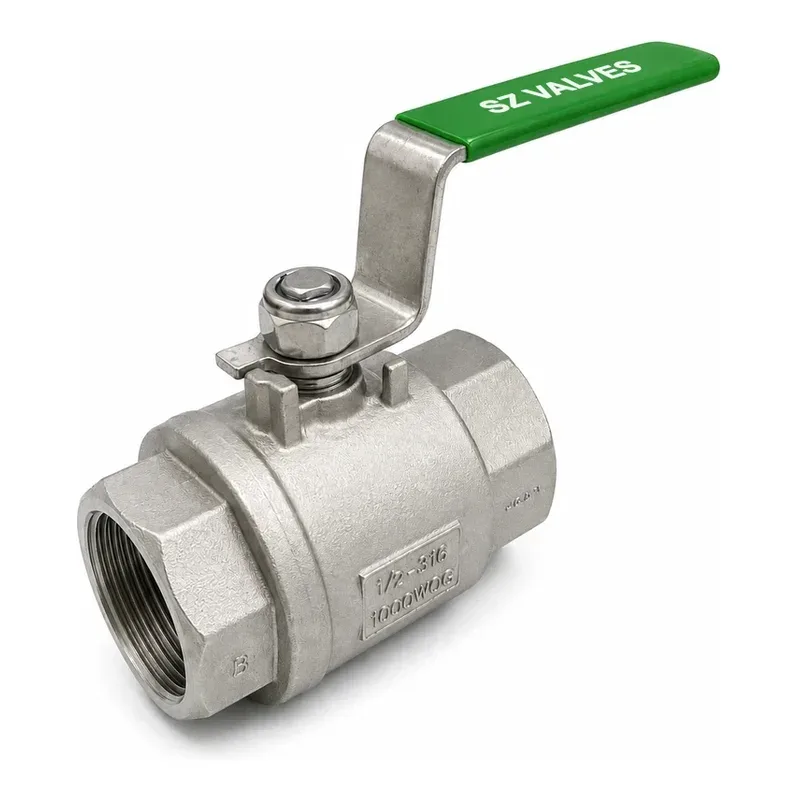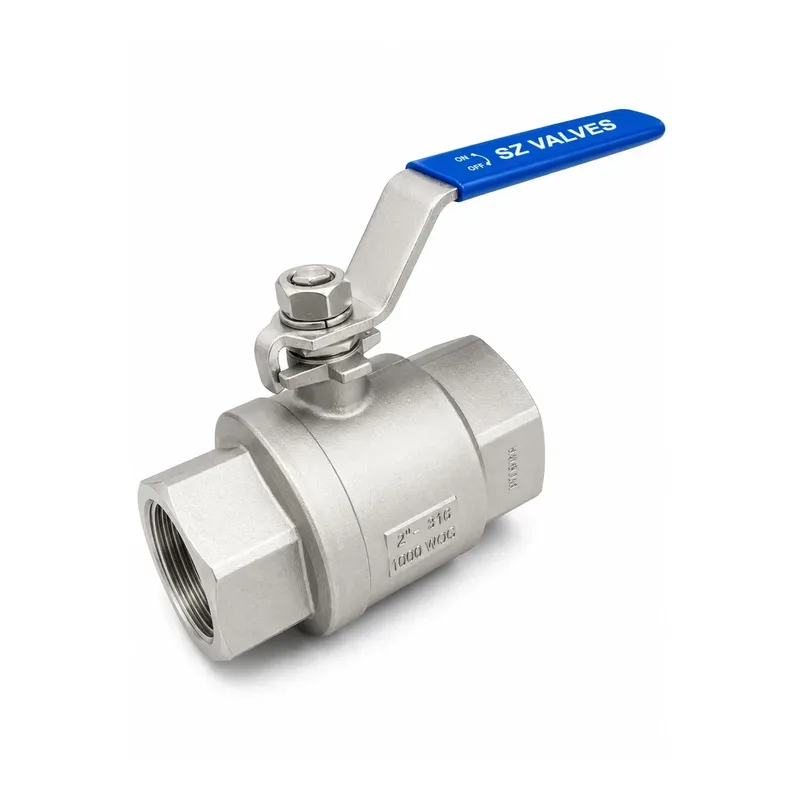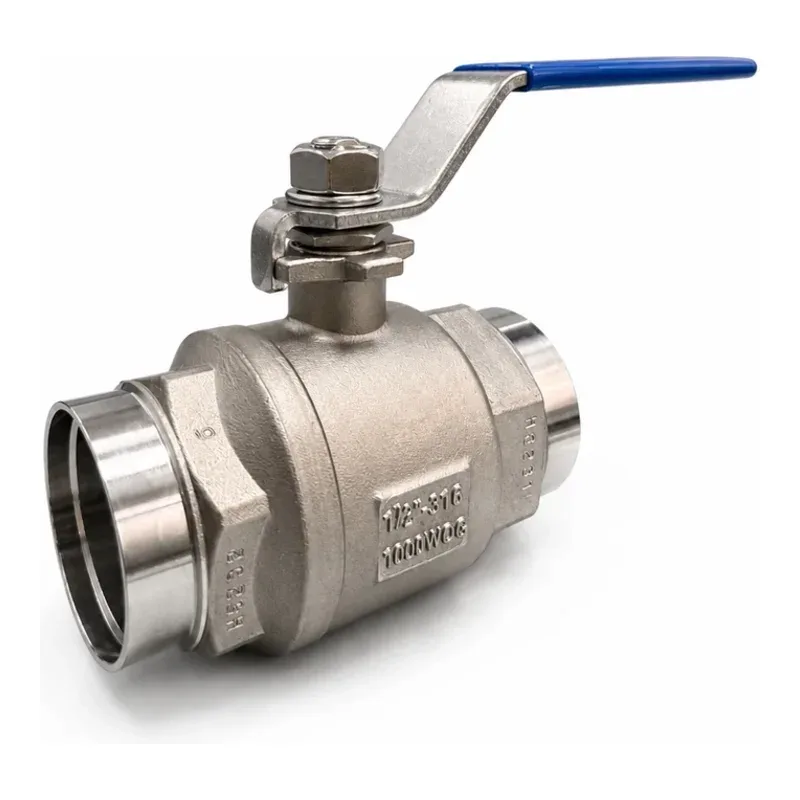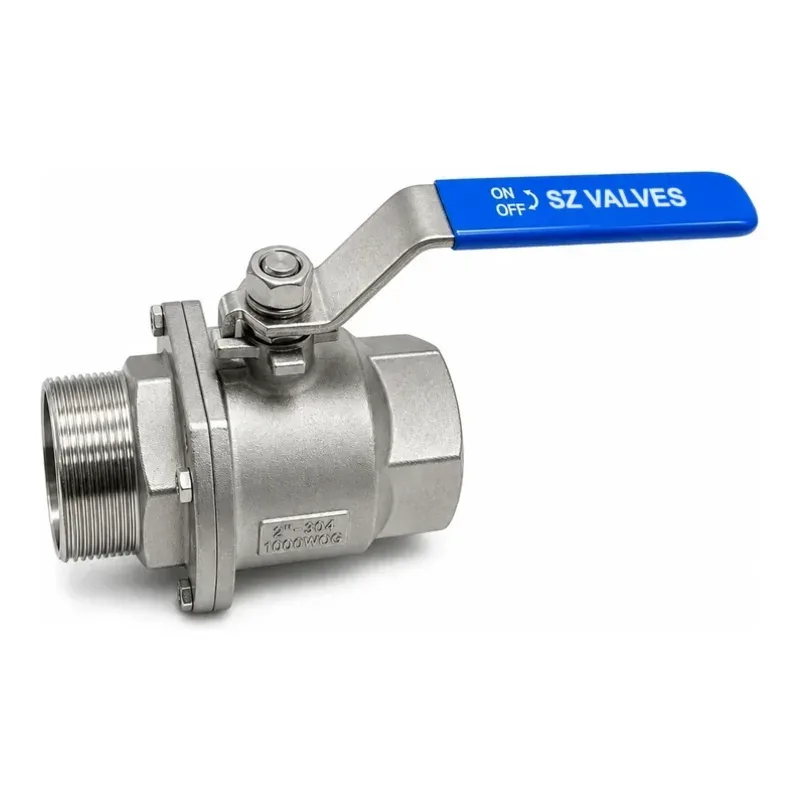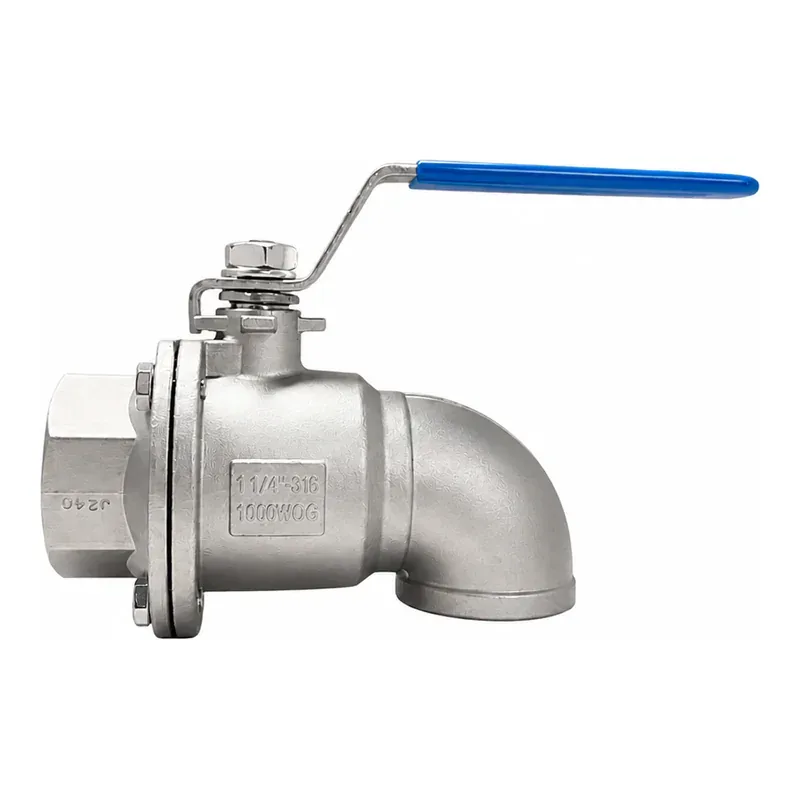
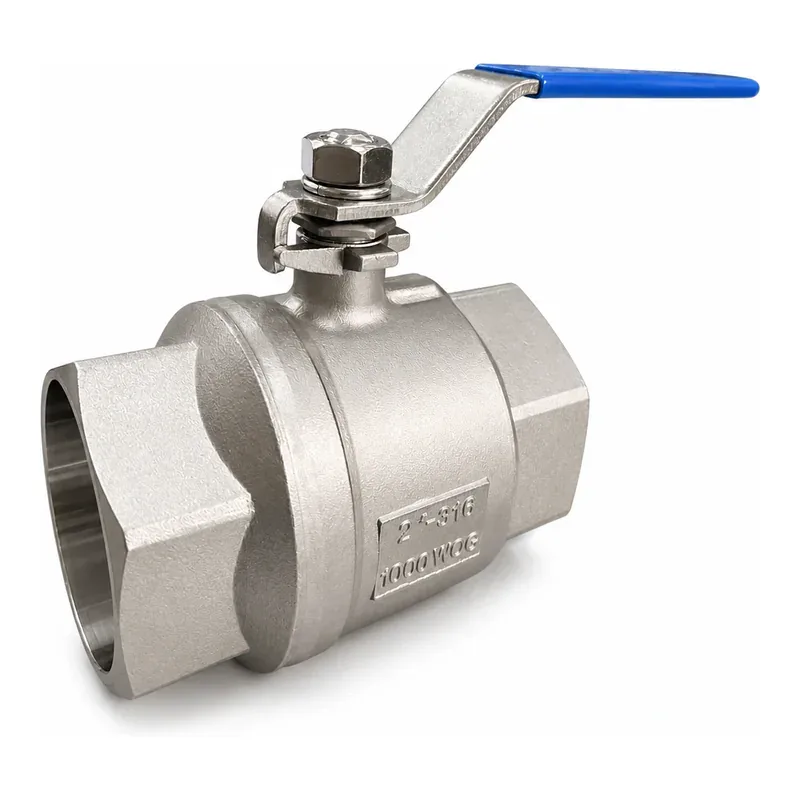
Socket Weld Ball Valve — Two-Piece, 1000 WOG
A socket weld ball valve is welded straight into the line: the pipe slips into a machined socket on each end and a fillet weld seals it outside. The two body halves are welded as well — no threaded joint anywhere. Cast stainless body in CF8 (304) or CF8M (316), full port, 1000 WOG, sizes 1/4″ to 4″.
Welded in. Sealed for good.
A socket weld ball valve does away with the threaded joint. Each end of the body carries a machined socket; the pipe slips in, seats against the shoulder, and a fillet weld around the outside makes the seal. The joint has no threads to tape, no threads to loosen under vibration, and no leak path for the fluid to find.
The valve itself is our two-piece platform: a cast stainless body in CF8 (304) or CF8M (316), a full-port bore, PTFE seats and 1000 WOG working pressure. The size run covers 1/4″, 3/8″, 1/2″, 3/4″, 1″, 1-1/4″, 1-1/2″, 2″, 2-1/2″, 3″ and 4″, with socket depths of 10 to 15 mm by size — dimensions for every size are on the sheet above.
When socket weld beats threaded and butt weld Common industry practice puts socket weld in the middle of the range: stronger and tighter than a threaded joint, simpler to fit than a butt weld. The pipe needs a plain square cut — no thread cutting, no bevel — and the socket holds it in line while you weld. That makes socket weld the usual choice up to about 2″ where the line must not leak and will not be taken apart. Above that, flanged and butt weld ends take over, which is why our own butt weld valve covers the larger, heavier work.
A welded body, not just welded ends On this valve the two body halves are welded together, not screwed. Between the welded body seam and the socket weld ends, the finished installation has no threaded joint anywhere — nothing to work loose, nothing to seep. Weld heat still needs respect: the PTFE seats sit near the center, so weld in short passes with the valve open, and let each end cool before starting the other.
- Model
- V-2B-SW
- Body
- Cast stainless steel, ASTM A351 CF8 (304) or CF8M (316)
- Size range
- 1/4″ – 4″ (DN8 – DN100)
- Connection
- Socket weld, socket depth 10–15 mm by size
- Seat
- PTFE seats, thrust washer and packing
- Pressure
- 1000 WOG
- Temperature
- −20 to 180 °C
- Port
- Full port
- Operation
- Lever handle, 90° quarter-turn
Where it gets used
Every valve leak tested.
Each unit is checked for leakage before shipment.
What is a socket weld ball valve?
A ball valve whose ends carry a machined socket instead of threads. The pipe slips into the socket and a fillet weld around the outside seals the joint, so the connection is permanent and has no thread leak path.
Socket weld or threaded — which should I use?
Common practice: threaded where the line is low-risk or gets taken apart for service; socket weld where the joint must stay tight for good — vibration, hazardous fluid, or lines nobody should open. The valve itself is the same two-piece platform either way.
Socket weld or butt weld — which should I use?
Socket weld needs only a square pipe cut and self-aligns in the socket, which makes it the simpler weld up to about 2″. Butt weld takes a beveled end and more fit-up work, and is the usual pick for larger bores and the heaviest joint integrity. We build both — see our butt weld ball valve for that end.
Will welding damage the seats?
Weld heat can reach the PTFE seats if it is not managed. Keep the valve fully open, weld the socket in short passes rather than one continuous run, and let the first end cool completely before welding the second. The socket sits at the far end of the body, away from the seats, which keeps the heat input manageable.
What sizes and socket depths do you make?
Eleven sizes from 1/4″ to 4″. Socket depth is 10 mm up to 1″, 12 mm at 1-1/4″ and 1-1/2″, and 15 mm from 2″ to 4″. Full dimensions for every size are in the dimension sheet on this page.