Tri-Clamp 3-way valve — L-port or T-port ball valve, manual or pneumatic
Tri clamp 3 way ball valve in 316 stainless — L-port or T-port, Tri-Clamp ends, 1/2″ to 2″. Manual lever (MV-3N) or pneumatic actuated (MV-3M-TC).
Built to hold, built to last.
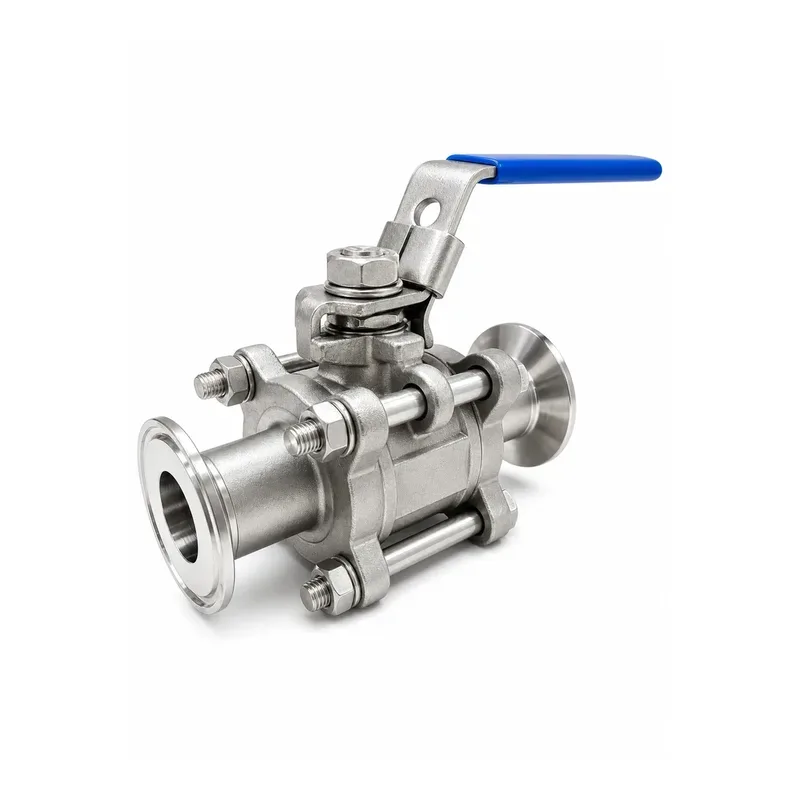
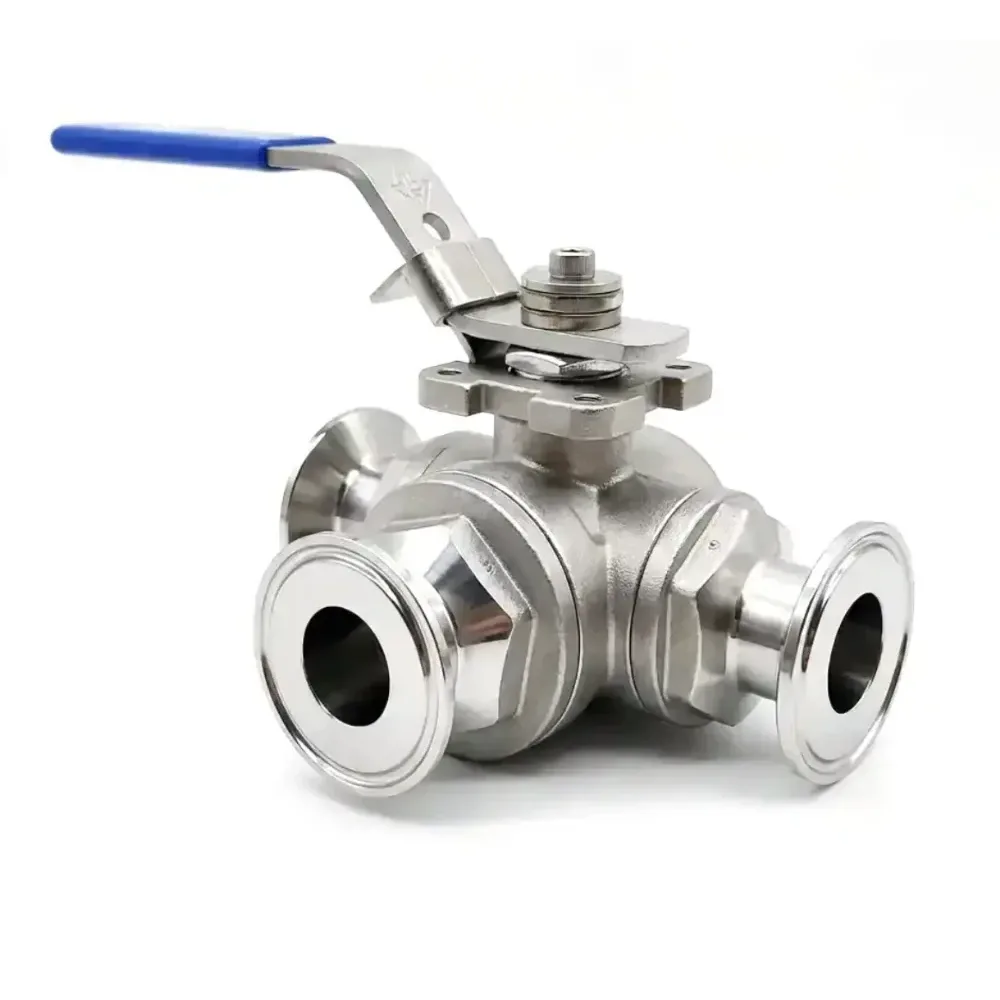
A tri clamp 3 way ball valve for hygienic lines: 316 stainless steel with a sanitary polish, Tri-Clamp ends, sizes 1/2″, 3/4″, 1″, 1-1/2″ and 2″, rated 1000 WOG. It comes two ways: the manual MV-3N — turn the lever and the flow goes somewhere else, no air line, no wiring — and the pneumatic MV-3M-TC, which does the same job on an air signal.
Two decisions define the valve, and both are made when you order. First, the port. An L-port bore diverts: it sends the inlet to one outlet or the other, a clean either/or between two destinations — filler A or filler B, product or return loop, tank 1 or tank 2. A T-port bore mixes or distributes: it can feed two ports at once, combining two streams into one or splitting one into two. They look identical from the outside; the bore through the ball is the only difference, and it decides the job the valve can do.
Second, the seat. Both options are PTFE — what changes is how much of the ball the PTFE wraps. The encapsulated seat closes off the dead space around the ball, leaving nothing for product to lodge in, and runs −20°C to 80°C. The semi-encapsulated seat takes far more heat, −20°C to 180°C, and suits hot water and hot process lines. If the product must not be trapped, take the encapsulated seat and live with 80°C.
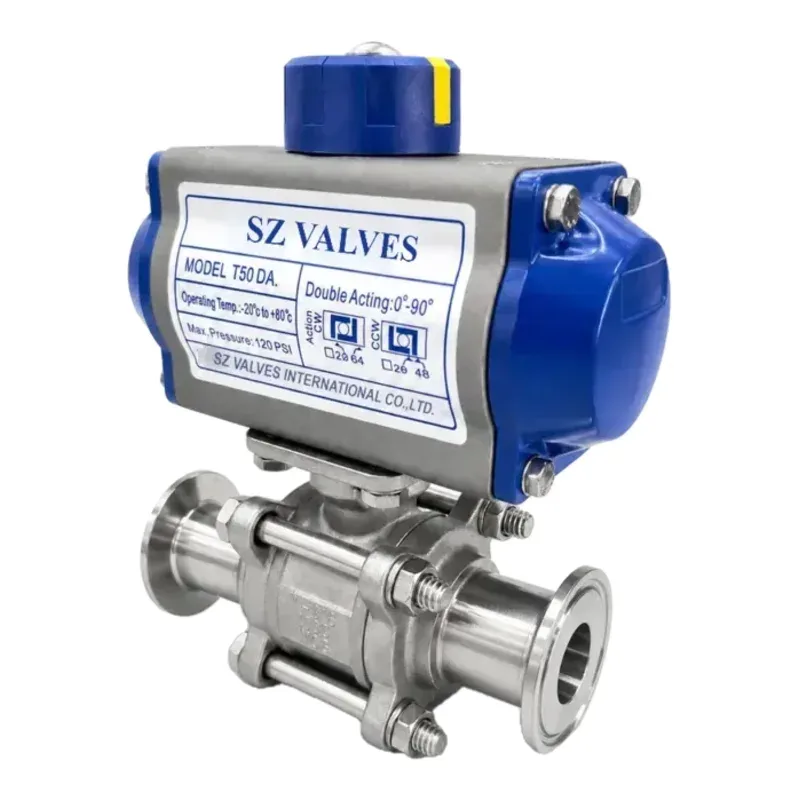
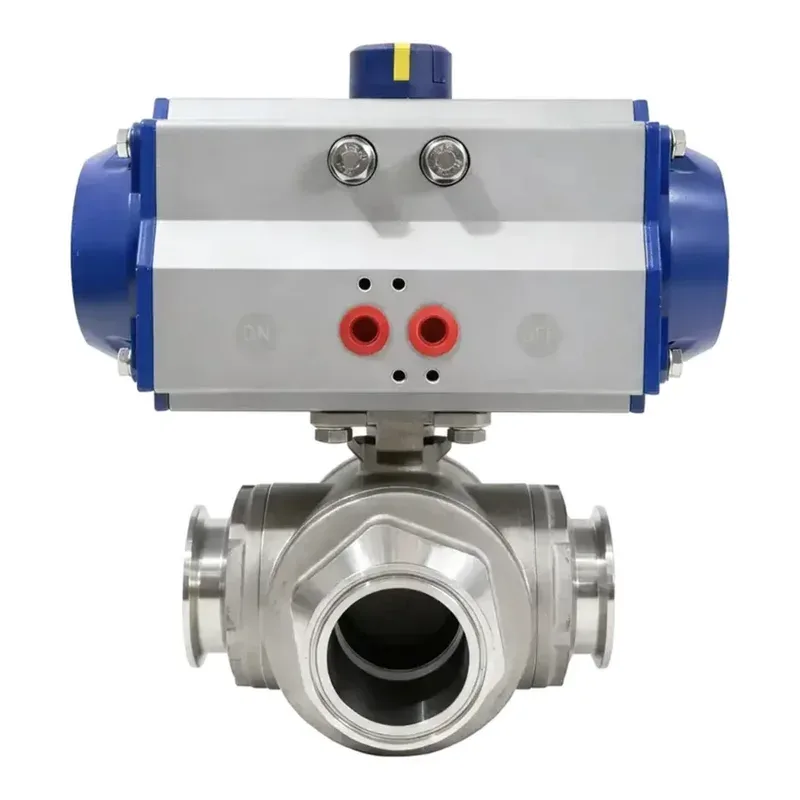
The pneumatic build carries a rack-and-pinion actuator on an ISO 5211 pad and switches the flow path on an air signal: choose double acting (DA) or spring return (SR), with the spring set to fall back to the port you nominate at order time, air supply 4–8 bar. Solenoid valves, limit switch boxes and positioners are available as options.
Cleaning is a hand job in the best sense: undo the clamps and the valve comes off the line; undo the body bolts and the ball and seats are in your hands for inspection between batches. Tell us the size, the port, the ends, manual or actuated, and the line temperature — we will quote it within 24 hours.
-
MV-3N · Manual
-
MV-3M-TC · Pneumatic
- Body
- 316 stainless steel, sanitary polish
- 316 stainless steel, sanitary polish
- Size range
- 1/2″–2″
- 1/2″–2″
- Thread
- Tri-Clamp
- Tri-Clamp
- Seat
- PTFE — encapsulated or semi-encapsulated
- PTFE — encapsulated or semi-encapsulated
- Pressure
- 1000 WOG
- 1000 WOG
- Temperature
- −20°C to 80°C (encapsulated seat) or −20°C to 180°C (semi-encapsulated)
- −20°C to 80°C (encapsulated seat) or −20°C to 180°C (semi-encapsulated)
- Port
- L-port (diverting) or T-port (mixing)
- L-port (diverting) or T-port (mixing)
- Operation
- Manual lever — no actuator mounting pad
- Rack-and-pinion pneumatic actuator, ISO 5211 — double acting (DA) or spring return (SR), air supply 4–8 bar
Where it gets used
Every valve leak tested.
Each unit is checked for leakage before shipment.
L port vs T port — which one do I need?
An L-port diverts: it sends the inlet to one outlet or the other, never both. A T-port mixes or distributes: it can feed two ports at once. Switching a line between two destinations — L-port. Combining two streams, or splitting one into two at the same time — T-port. Describe what the valve has to do and we will tell you which one.
What is the maximum temperature?
It depends on the seat. The encapsulated PTFE seat runs −20°C to 80°C; the semi-encapsulated seat runs −20°C to 180°C. Tell us the line temperature and we will fit the right one.
Which seat should I choose?
If the product must not sit in a crevice — food, beverage, syrups and concentrates — take the encapsulated seat: the PTFE fills the dead space around the ball. If the line runs above 80°C, take the semi-encapsulated seat and its 180°C ceiling.
How is the valve cleaned?
By taking it apart. The clamp ends open without tools, and the body bolts undo so the ball and seats come out for inspection and swabbing between batches. Nothing needs cutting and nothing needs a special tool.
Can the manual valve be automated later?
No — the manual MV-3N has no actuator mounting pad, so an actuator cannot be bolted on afterwards. If the valve must divert on a signal, order the pneumatic build (MV-3M-TC) on this page: it ships with the actuator factory-mounted on an ISO 5211 pad.
Double acting or spring return — which should I pick?
Double acting (DA) uses air to open and to close, and stays put if air is lost. Spring return (SR) drives to its preset position — the port you nominate at order time — whenever air fails. If the line must fail to a known state, take spring return.