
On food, beverage, craft brewing and dairy lines, buyers often treat the word "sanitary" as if it automatically means "must be CIP-capable (Clean-in-Place)." It's a common assumption, but not an accurate one. Take the three-piece sanitary ball valve from Taiwanese manufacturer valves.tw as an example: the website describes its cleaning method as take it apart and clean it. The clamps open without tools, and the three-piece body can be unbolted in place, so the ball, seats and gaskets can be cleaned and visually inspected between batches. This is closer to COP (Clean-out-of-Place) / disassemble-and-clean logic than to a CIP narrative where "the valve stays in the line and is cleaned automatically by recirculating chemical solution."
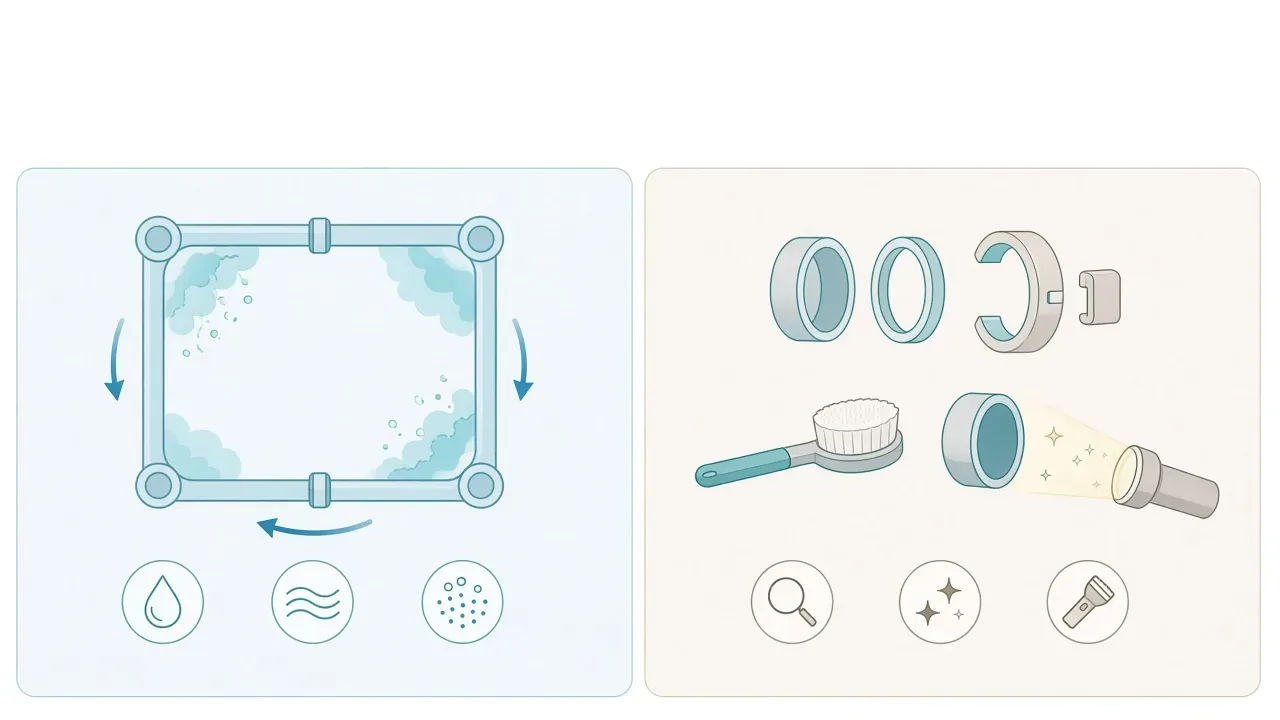
This article explains when disassemble-and-clean is the right answer, when you should switch to another valve type better suited to CIP, and how to make your selection using facts you can verify on the manufacturer's website, so marketing language doesn't lead you astray.
What is a sanitary ball valve, and what problem does it solve?
A sanitary ball valve is still a ball valve at heart: quarter-turn shutoff, a clear flow path, and relatively low flow resistance when it's full port. What sets it apart from a general industrial ball valve is mostly the end connection type (such as Tri-Clamp), a structure that can be disassembled, the wetted materials (for example A351 CF8M / 316 with PTFE seats), and whether it's easy to remove and inspect between batches.
According to the sanitary ball valve product page, the V-3N / V-3N-L3 uses a three-piece body: the center body is clamped between two AISI 316 end caps and held with bolts; once the bolts are removed, the ball, seats and stem-related parts can be taken out for maintenance. End connections are available as Tri-Clamp or extended OD tube butt-weld. Sizes cover 1/2″ to 4″, all full port, with a 1000 WOG pressure rating, PTFE seats, and an operating temperature of −20°C to 180°C (per the website's specifications).
What these design features solve is: reliable shutoff, a large flow path, and the ability to open it up and see clearly when needed. They do not automatically claim cleaning validation for an entire CIP loop.
Why shouldn't "sanitary" be equated with "CIP-capable"?
CIP usually means that equipment and fittings are cleaned in their installed position through a predefined cleaning/rinsing cycle, often accompanied by validation records. If a supplier has never claimed CIP/SIP capability on its product pages and doesn't list the corresponding sanitary certification documents, buyers shouldn't upgrade the word "sanitary" into a CIP compliance statement on their own.
valves.tw's cleaning description for this series is straightforward: clean it by taking it apart. The Tri-Clamp ends open with the clamp, with no cutting torch needed; the three-piece body lets you remove the center section while the end caps stay in the line, taking out the ball and seats for between-batch cleaning or replacement. This is valuable in the following situations:
- Between batches you must visually inspect the ball and sealing surfaces for residue, discoloration or scratches
- The product is viscous, sugary, fibrous or contains colorants, and tends to leave visible residue in crevices
- The line is small to mid-sized with frequent changeovers, and disassembly-cleaning labor can be built into the changeover SOP
- The quality system requires physical evidence that parts can be "seen, wiped and replaced," not just reliance on chemical solution parameters
In other words: disassemble-and-clean isn't an outdated approach; it's a verifiable cleaning strategy. The prerequisite is that your process allows it and you're willing to schedule the labor and time for disassembly and reassembly.
When is three-piece Tri-Clamp disassemble-and-clean the right answer?
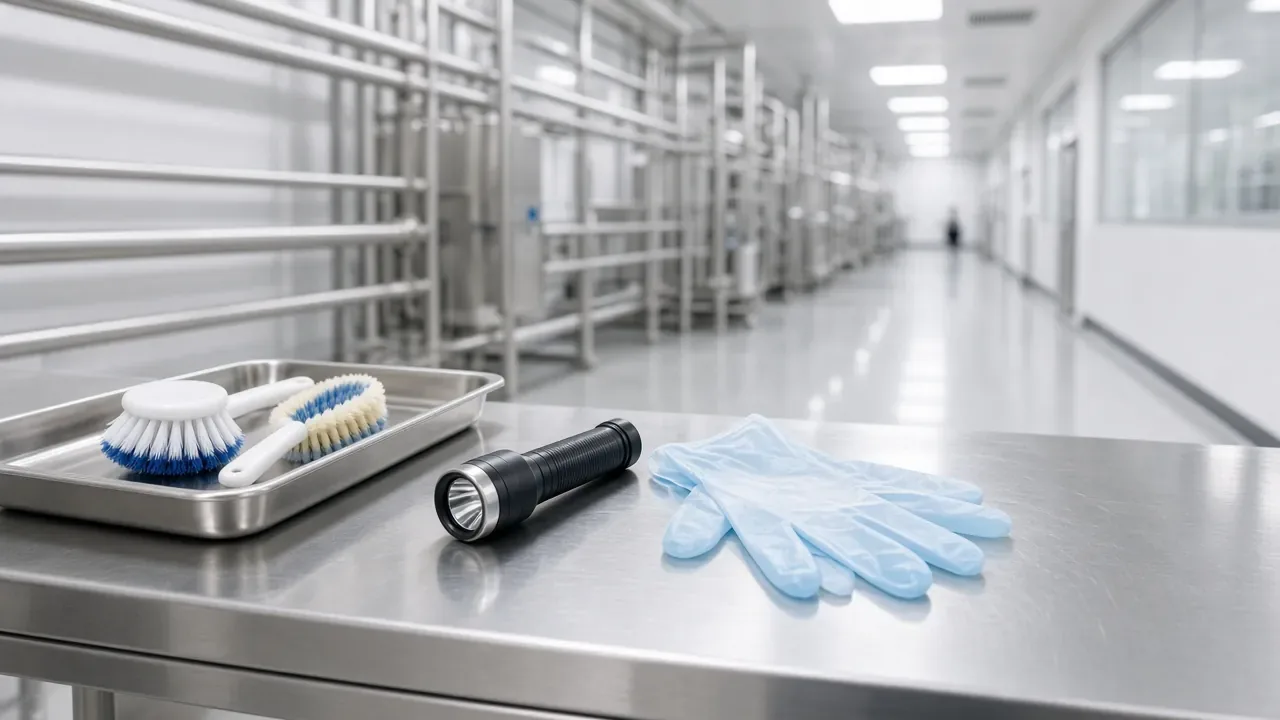
1. You need to "open it and look," not just "flush it and call it done"
Inside a ball valve there are contact surfaces between the ball and the seats. For some products, residue isn't a uniform thin film but localized buildup. Opening the valve and shining a light on the seal band and flow path is more intuitive than just looking at a CIP flow meter. If customer plant audits or internal audits often ask "how do you confirm this valve is clean," disassembly + visual inspection + records is often easier to justify.
2. When changing batches, colors or flavors, disassemble-and-clean keeps risk more controllable
A common pain point in beverages and craft brewing is flavor carryover and color differences. Tri-Clamp lets you quickly remove the whole valve or open the end connections, and with the three-piece design you can take out the internals. This makes it easy to replace "suspect parts" with new seats outright or wipe them down thoroughly, then reassemble. A valve that's welded into the line with no way to remove its internals is actually harder to deal with.
3. The line is sensitive to pressure drop and needs the flow characteristics of a full port ball valve
If your process cares more about flow cross-section and shutoff speed, and your cleaning strategy can accept COP, a three-piece full port sanitary ball valve is often a practical choice. The website emphasizes that the bore is aligned with the tube inner diameter (tube ID), which helps maintain flow velocity and avoid unnecessary reductions in diameter.
4. You already have a clear disassembly-cleaning SOP and spare parts strategy
Making disassemble-and-clean work isn't about slogans; it's about what happens on the floor: how many sets of PTFE seats and gaskets to stock, torque and assembly sequence, how to do a simple leak check after reassembly, and who signs off. If these processes are mature, the Tri-Clamp three-piece valve is very easy to work with.
When shouldn't you force a ball valve to be called a CIP solution?
In the following situations, the more common approach is to evaluate butterfly valves, diaphragm valves, or other valve types designed with CIP / low dead space as the focus (actual selection must still be based on your process drawings and cleaning validation requirements):
- Regulations or customer specifications explicitly require clean-in-place and specific sanitary certification documents, and the supplier's public certificate list doesn't cover that item
- The line almost never stops, leaving no window for disassembly and visual inspection
- Cleaning validation is based mainly on CIP indicators such as conductivity, TOC and microbial recovery, and the equipment must remain assembled
- The media very easily gets trapped in cavities, and you can't accept the cavity / contact surface characteristics inherent to the ball valve structure
Honest selection matters more than forcing a keyword to fit: a sanitary ball valve can be an excellent shutoff and disassemble-and-clean component, but it isn't necessarily the only right answer for every CIP main line.
How to compare it with "CIP-capable valve types" (without disparaging others or inventing specs)
In practice, you can quickly sort things out with three questions:
- Can / should the valve stay in the line during cleaning? It can and must → think CIP-oriented valve types first; it needs to be removed for visual inspection → a three-piece Tri-Clamp ball valve makes sense.
- Which takes priority: shutoff or flow resistance? Tight shutoff and full port needed → ball valves often have the edge; a very thin disc or a diaphragm-type structure with no ball cavity needed → evaluate other valves.
- What documents do you need? If you only need material traceability, ISO 9001 / CE, factory leak testing, and dimensional / MTR documents a factory can provide, the ball valve supply chain is easy to work with; if a specific sanitary association mark is named, first check the certificate list in the supplier's FAQ, and if it isn't listed, it shouldn't be claimed.
valves.tw publicly states in its FAQ that it holds ISO 9001 and CE, and explains that any certificate not listed is not held; materials can be backed up with MTRs. This matters for buyers: keep "factory quality system" and "sanitary association product certification" separate, so you don't buy with the wrong expectations.
When choosing a Tri-Clamp sanitary ball valve, think about end connections and automation too
Under the same body concept, the website offers two end connection approaches:
- Tri-Clamp: open the clamp to clean offline or partially disassemble, or change lines; suited to frequent removal.
- Extended butt-weld ends (V-3N-L3): welded into the line more permanently; the extended section acts as a heat sink, reducing the risk of welding heat affecting the PTFE seats. Cleaning still follows the three-piece body disassembly logic, but the end connection itself is no longer as "easy to remove on the fly" as a clamp.
If you plan to go pneumatic in the future, evaluate the V-3NM / V-3NM-L3 with an ISO 5211 high-mount directly, rather than assuming any manual valve can be perfectly retrofitted later. The pneumatic page also explains that actuators can be assembled and cycle-tested at the factory, and solenoid valves, limit switches and so on can be quoted together.
Conclusion: define your cleaning strategy first, then choose a sanitary ball valve
Instead of saying "a sanitary ball valve must be CIP-capable," we suggest asking: "What is my process cleaning strategy? Within that strategy, should this valve serve as a shutoff point, a diversion point, or a node that can be disassembled and inspected?"
When you need between-batch visual inspection, residue removal at changeover and full port shutoff, and can schedule disassembly-cleaning labor, a three-piece Tri-Clamp sanitary ball valve is often the right answer. When your system has in-place CIP / specific sanitary certification as a hard requirement, you should switch to a valve type and document package that meets that requirement, rather than asking a ball valve supplier to verbally upgrade its specs.
If you're selecting a manual or pneumatic sanitary ball valve for a food, beverage or craft brewing line, first list your pipe size, end connection (clamp or butt-weld), media temperature and whether you need an actuator, then compare the V-3N / V-3N-L3 specs on the sanitary ball valve product page, or email [email protected] to ask about selection and lead time. The factory in Longjing, Taiwan has been casting, machining and assembling since 1995, and is a good fit for purchasing conversations that call for a disassemblable structure and traceable material documentation.