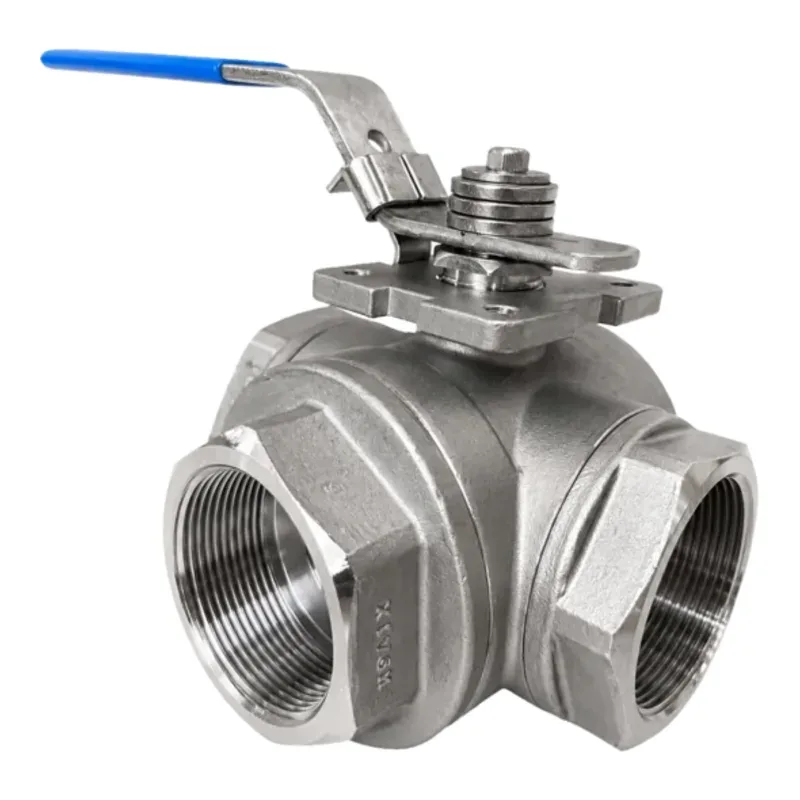
Manual 3-way ball valve, T-port or L-port
A manual 3-way ball valve in 316: T-port for mixing, L-port for diverting. Both are stock builds — no default, you pick.
Built to hold, built to last.
A three-way ball valve puts a third port on the bottom of the body, so one valve does what usually takes two shut-off valves and a tee: switch between two lines, divert flow, or blend two streams into one.
The ball comes two ways. L-port connects the bottom port to either side port — switch between two tanks or two pumps. T-port can run straight through, split to a branch, or pull two inlets into one outlet for mixing. Neither bore has a fully closed position: a three-way ball valve switches flow rather than shutting it off. Both are stock — say which one when you ask for a price.
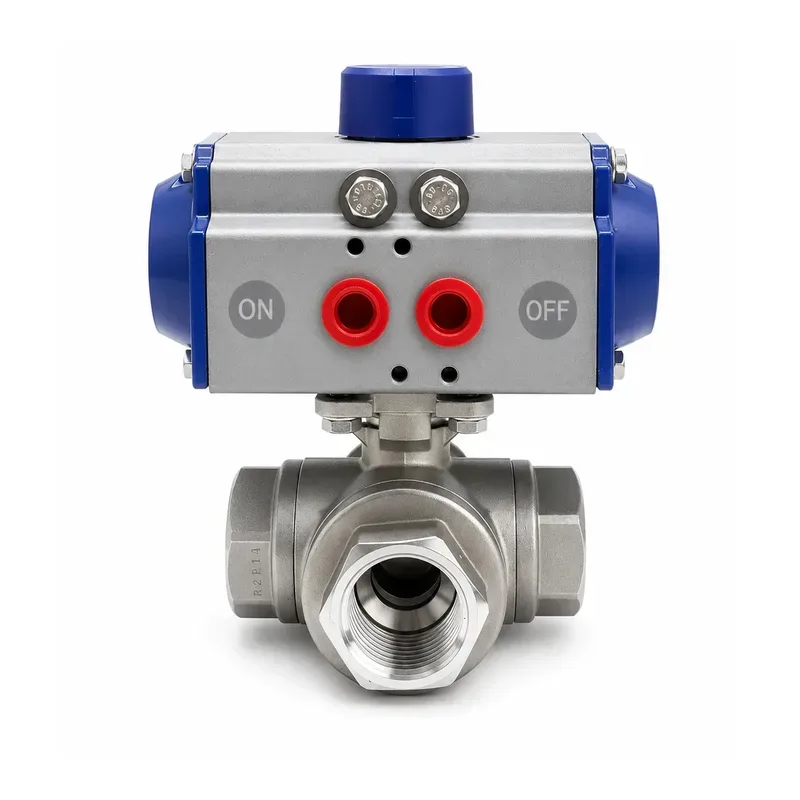
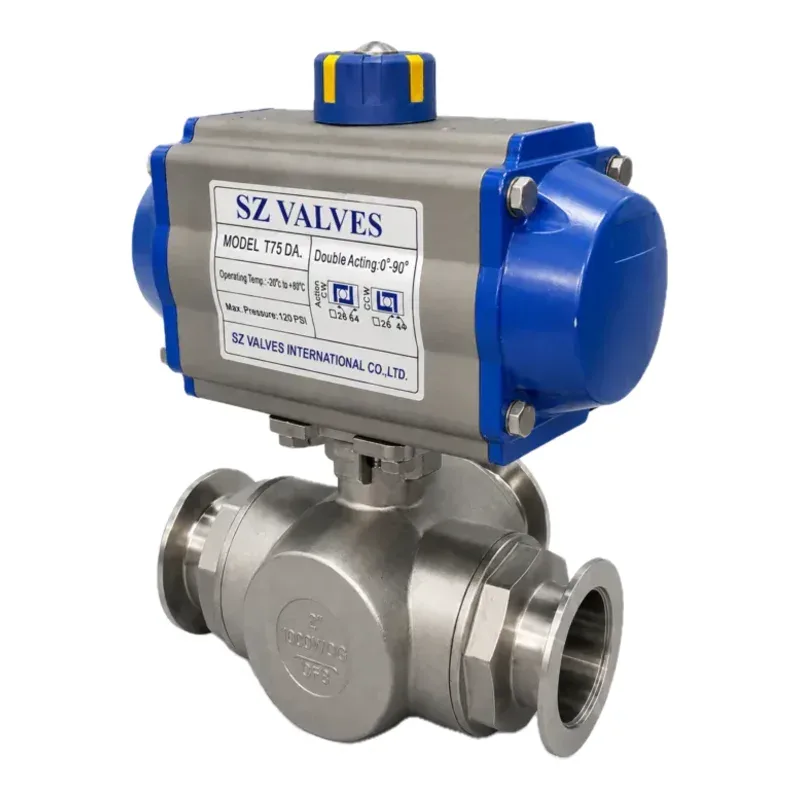
Under the lever sits an ISO-style mounting pad, so a quarter-turn actuator can drop on later without a bracket or linkage. If you would rather have it arrive ready to run, see our actuated 3-way ball valve — the same three-way body shipped with the actuator mounted and tested.
Eight sizes: 1/4″, 3/8″, 1/2″, 3/4″, 1″, 1-1/4″, 1-1/2″ and 2″. Body, caps and ball are investment-cast A351 CF8M with PTFE seats and a SS316 stem, rated 1000 WOG from −20°C to 180°C. PT threads are stock; NPT and PF are made to order.
- Model
- MV-3M
- Body
- A351 CF8M (316)
- Made to order
- CF8 (304) to order
- Size range
- 1/4″–2″
- Thread
- PT stock · NPT / PF to order
- Seat
- PTFE
- Pressure
- 1000 WOG
- Temperature
- −20°C to 180°C
- Port
- T-port or L-port
- Operation
- Manual quarter-turn, latch-lock lever
Built for essential flow control.
Every valve leak tested.
Each unit is checked for leakage before shipment.
L-port or T-port — which one should I choose?
L-port switches flow between two outlets — pick it for tank or pump changeover. T-port can mix two lines into one, run straight through, or divert to a branch. If you can sketch your flow path, send it with your inquiry and we will confirm the porting.
Does a three-way ball valve need a separate shut-off valve?
Yes, if the line needs positive shut-off. Neither the L-port nor the T-port ball has a fully closed position: the L-port always connects the bottom port to one side, and the T-port always leaves a path open. Treat a three-way as a switching valve rather than an isolation valve, and add a two-way valve downstream where the line must be shut tight.
Can I add an actuator later?
Yes. Under the lever sits an ISO-style mounting pad, so a quarter-turn pneumatic or electric actuator can be fitted later without a bracket. If you would rather have it arrive assembled and tested, order our actuated 3-way ball valve instead.
Do you make it in 304?
The stock valve is CF8M, the cast form of 316. CF8 (cast 304) is made to order — tell us the quantity and we will quote both.
Which threads are available?
PT (tapered) is the stock thread. NPT and PF are made to order on the same body. State the thread standard in your inquiry so the quote matches your piping.